Experience Designer
Jul 2023 - Aug 2024
3 Content Writer, 1 Front-End Engineer, 1 Project Manager
Website Strategy, Information Architecture, AI Transcription Benchmarking, SEO & Growth Marketing
As part of my full time role as a Digital Experience Engineer at Reduct, I redesigned sections of Reduct.Video’s website to improve user experience and implemented content marketing strategies to improve visibility and engagement. The goal was to create a responsive website, while leveraging targeted content strategies to drive traffic and conversions.
The How?
Reduct is a Transcription based Video tool
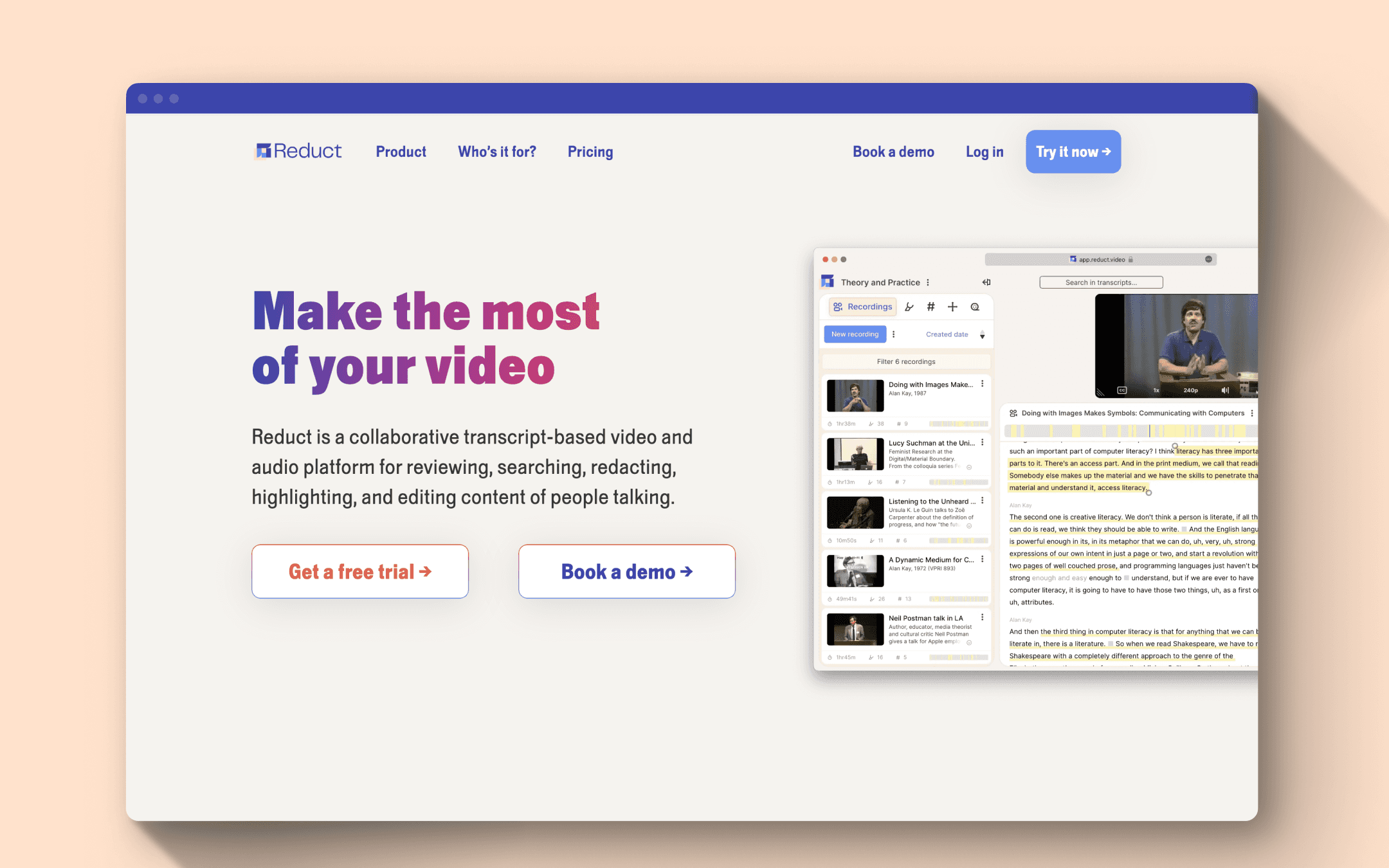
Reduct.Video helps researchers, journalists, and teams search, edit, and collaborate directly inside video transcripts. It basically turns a messy, long recording into something you can skim, search, highlight, and work through like a document.
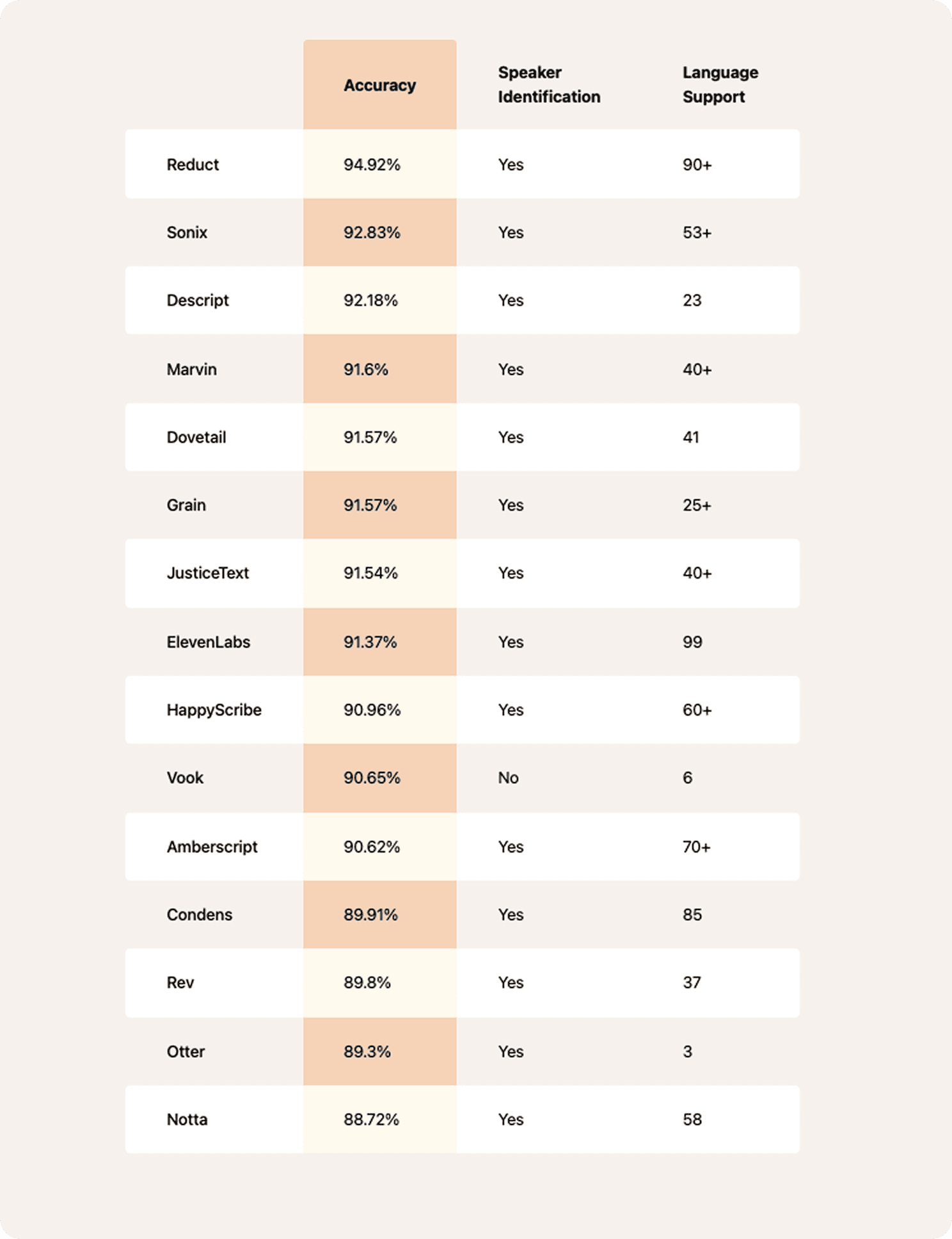
With so many AI transcription tools on the market, everyone claims they’re “accurate,” and users have no reason to trust that without proof. So we weren’t just competing on features we were competing on clarity and credibility. To get there, I partnered with content writers and marketers to define benchmarking metrics that could ground our messaging in real performance.
Creating credibility through AI Transcription Benchmark
Instead of relying only on just SEO keywords and marketing language, we built a transcription benchmark to make accuracy tangible. We selected six different types of audio from YouTube, had professional transcribers produce a ground-truth transcript for each, then ran the same files through 12 AI transcription tools with zero manual edits. Using a diff-based comparison, we evaluated what actually matters in practice filler-word handling, punctuation quality, and how much manual correction was still needed.
View Entire AI Transcription Benchmark.
Restructuring the Website Around User Groups
Reduct serves multiple audiences:
Journalists and Filmmakers
Researchers
Legal teams
Educators
Content Creators
Over time, as pages and SEO efforts grew, the website started blending these audiences together. The goal here again was to cater to the needs and pain points of users so they were guided to what they were actually looking for.
Messaging needed to be specific, and navigation needed clarity.
I redesigned key sections of the site and owned multiple pages as part of building a clearer information architecture. Every page needed a defined purpose and a defined audience, so it was always clear:
Who this tool is for.
What specific pain points it solves.
How it integrates into real workflows.
The site shifted from “one product for everyone” to structured journeys tailored to distinct user groups.
Building a Content & SEO Growth Loop
Once the structure was clear, growth needed a system.
I analyzed user behavior and content performance using GA4, Search Console, Google Tag Manager, Ahrefs, and Semrush. Instead of publishing generic blogs, I built topic clusters around high-intent search queries.
Focusing on:
Transcription comparison searches
Workflow-based queries
Industry-specific needs
End-to-end content performance tracking with each page having defined role in the funnel
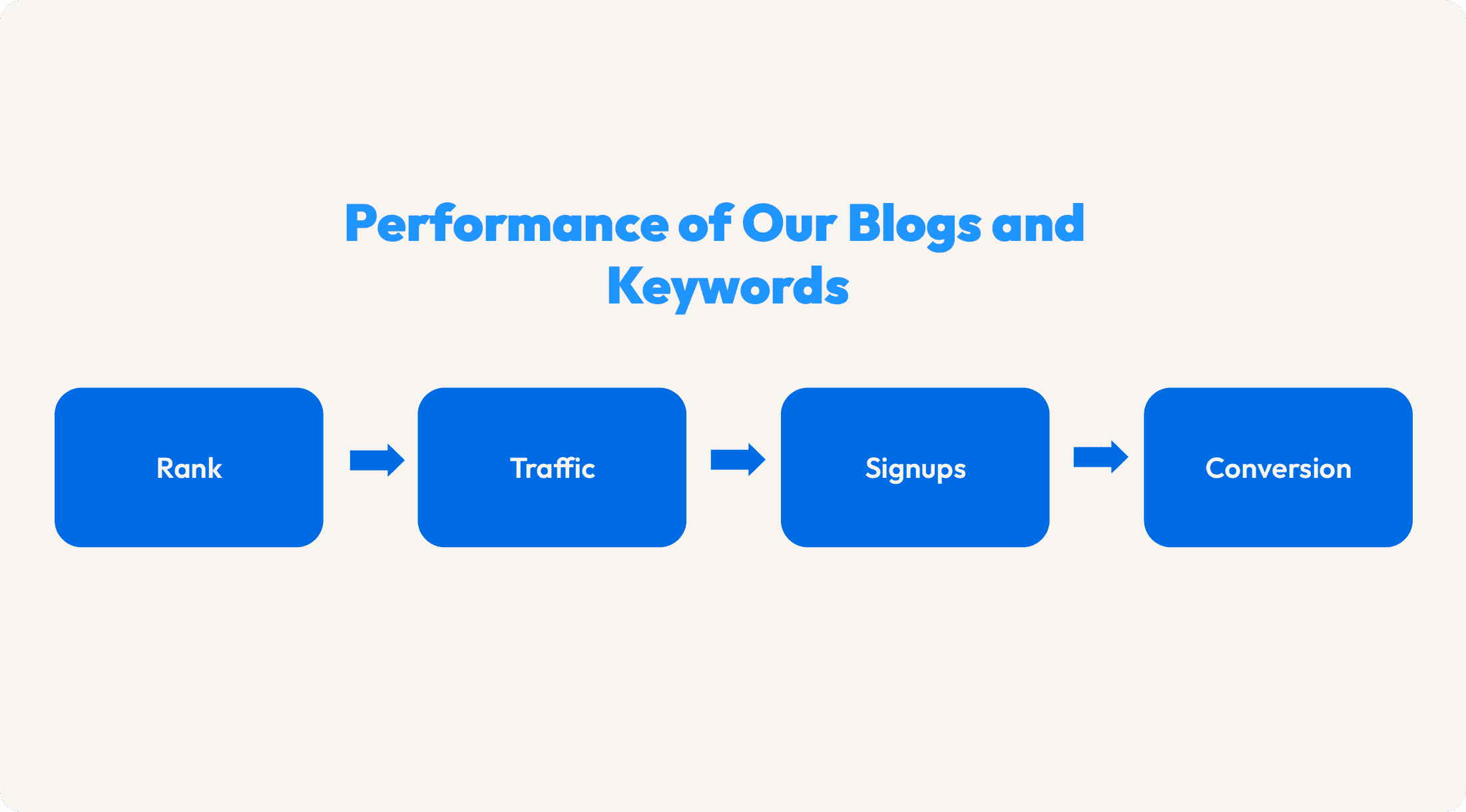
Keyword rankings were monitored (including 12 blogs ranking #1 for 38 keywords) , then paired with traffic share (what was actually pulling attention) and conversion/sign-up counts (what was actually driving business outcomes) . That measurement loop made tradeoffs obvious for example, some posts generated high sign-ups but lower conversion, which flagged clear opportunities to tighten page intent, internal linking, and conversion paths.
This way, content became acquisition infrastructure, not just marketing collateral.
The What?
Outcome
The redesigned website featured an intuitive user interface, faster load times, and a seamless experience across devices. Content marketing efforts led to a significant increase in brand awareness and customer engagement.
Project Status
The project was successfully completed and is live at Reduct.Video.
Takeaway
This project honed my ability to integrate design and content strategies effectively, emphasizing the importance of user-centric design. It also reinforced the value of iterative testing and collaboration in achieving impactful results.